PORTER, TEXAS — PAVER PATIOS
Paver Patios in Porter, TX
a paver patio in Porter is the right answer to the clay problem, because individual pavers can be lifted and re-levelled when the clay underneath them moves — and on Porter’s flat former-farmland clay, the ground will move. A poured concrete slab cannot be re-levelled. A paver patio can.
★★★★★ 75 five-star Google reviews • Licensed Irrigator LI0029444 • Open 24 hours a day
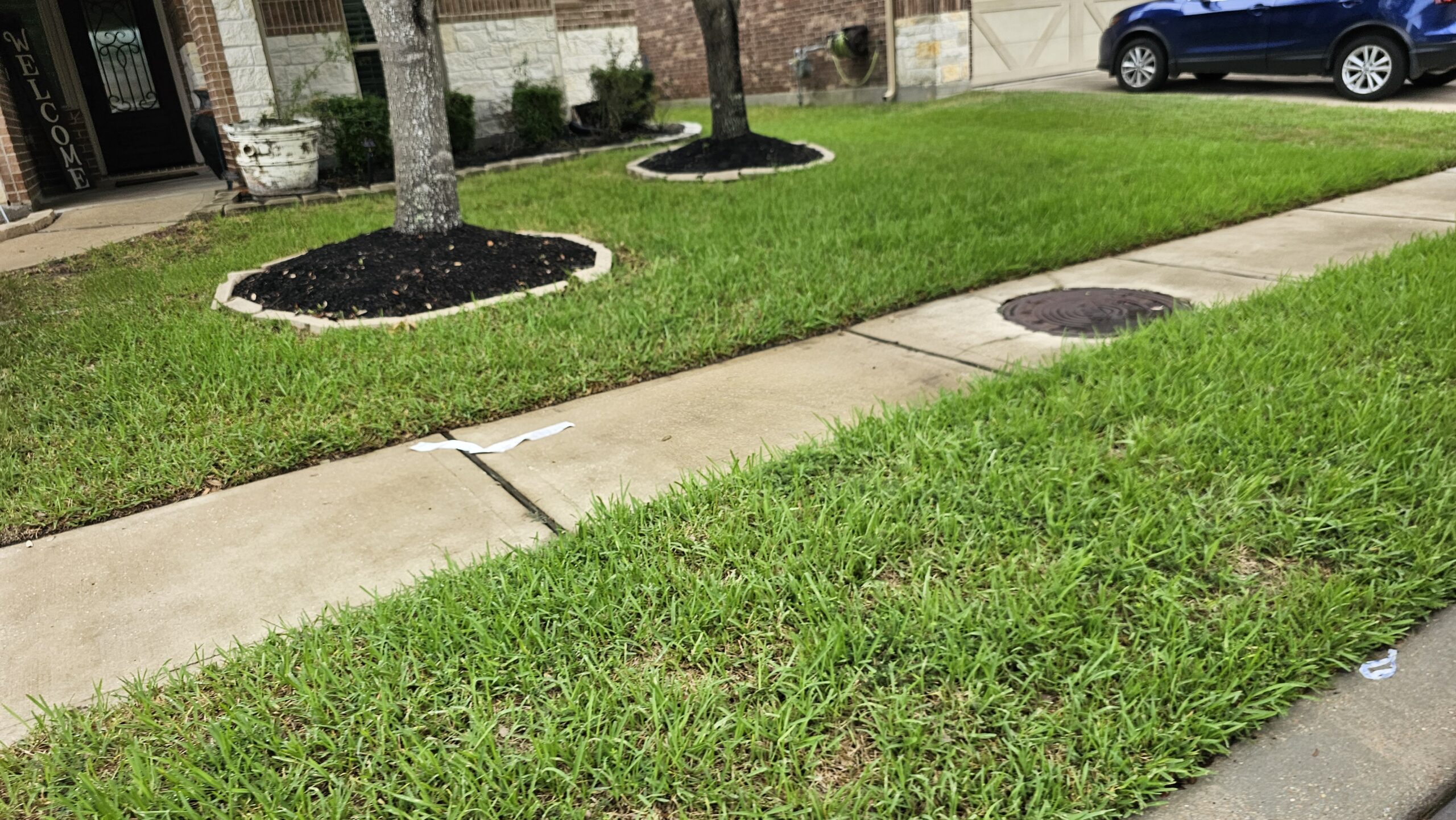
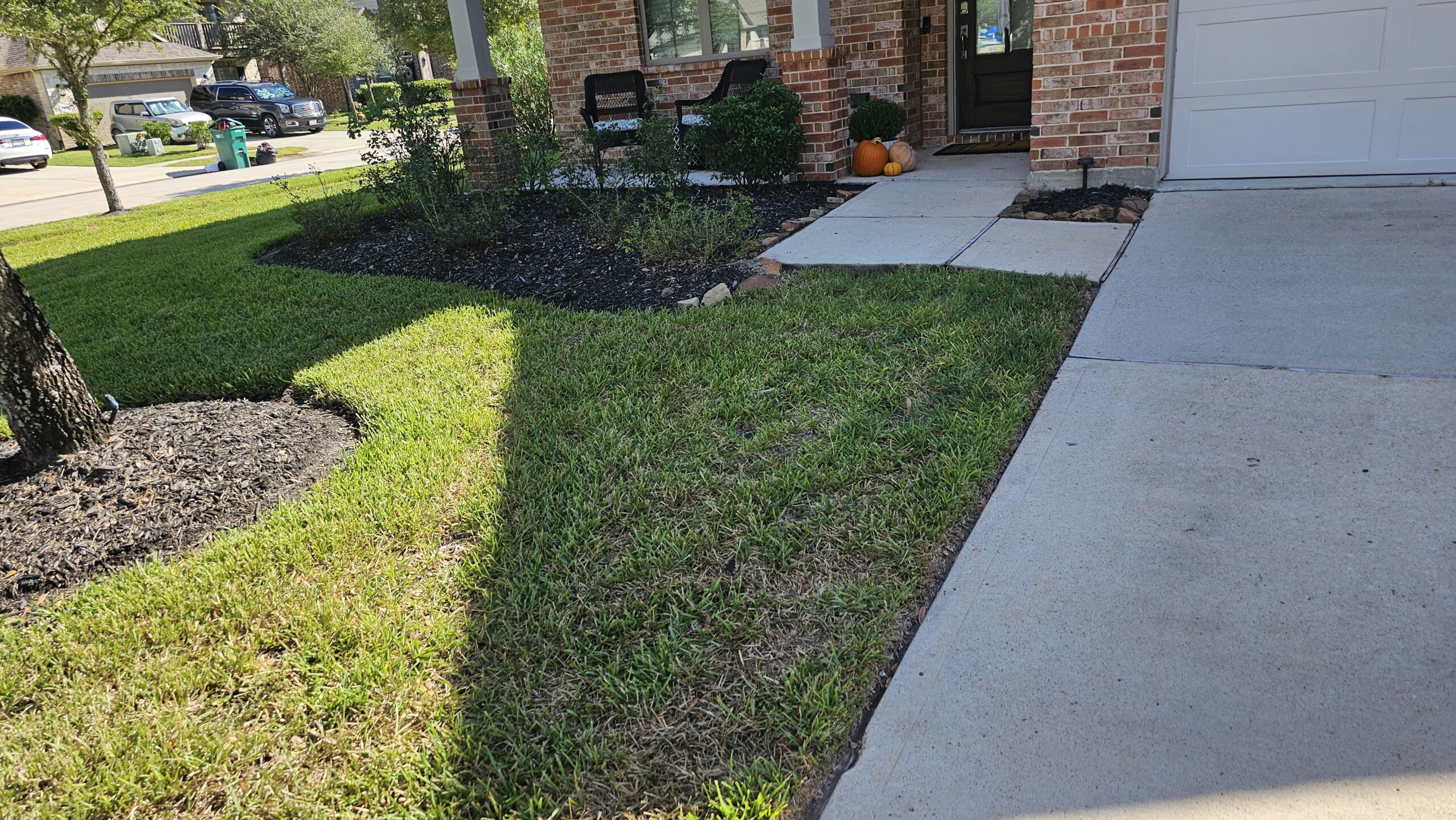
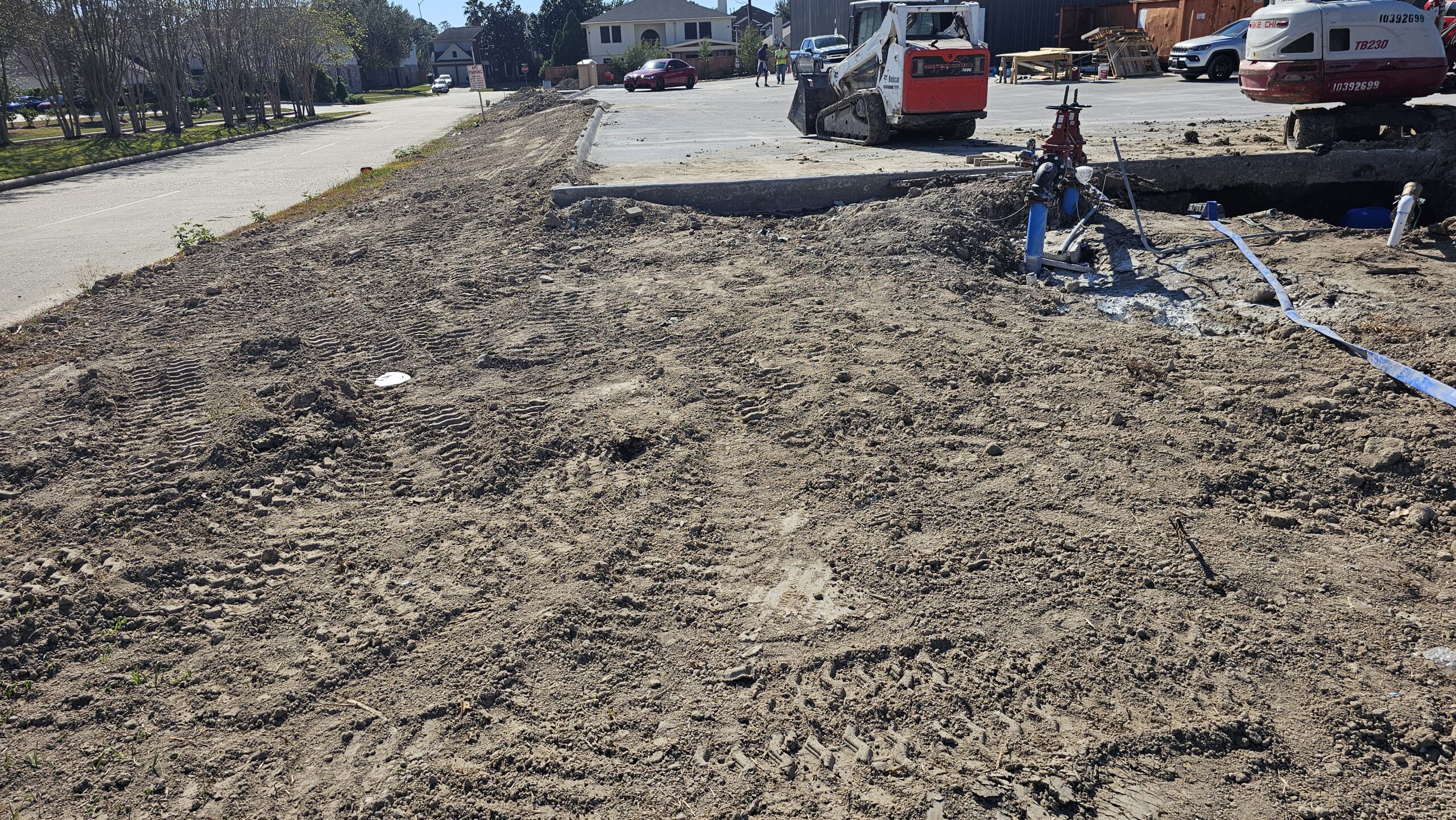
That is the one advantage that decides the whole conversation, and it is the one that matters most in Porter. The soil here is expansive clay, deep and uniform, on flat ground. It swells when it gets wet and shrinks when it dries, and it does that every year. A poured slab rides that movement until it cracks, and then the crack is permanent. Pavers ride the same movement, and when a section settles or heaves, we lift those pavers, fix the base underneath them, and put them back. The patio is not ruined. It is adjusted.
Porter is also a new-build town, and that shapes the paver work. The new homes in Valley Ranch and Woodridge Forest have new yards that are still becoming outdoor living spaces — a patio, a walkway, a driveway apron, a fire-pit area. Pavers are how a new yard gets its outdoor rooms without pouring a slab that the clay will crack in two years. And in the older neighborhoods — Porter Heights, Woodbranch, Roman Forest — pavers are how an old cracked patio gets replaced with something that will not crack the same way again.
What we do
- Paver patios — patios in concrete pavers, built on a compacted base with edge restraint and polymeric sand in the joints, so the patio holds its shape and drains right.
- Paver walkways — walks from the driveway to the front door, from the patio to the back gate, and through the beds, built to stay level on clay.
- Paver driveways — driveways in pavers, for homeowners who want the re-levelling advantage on the slab that takes the most weight and the most movement.
- Paver repair and re-levelling — pavers that have sunk, heaved, or spread. We lift the affected area, fix the base, and reset the pavers. This is the repair a poured slab cannot have.
- Pool decks and outdoor living — paver surfaces around pools and outdoor kitchens, where drainage and a level surface matter more than anywhere else in the yard.
The base is still the job
Pavers forgive clay movement better than poured concrete. They do not forgive a bad base. A paver patio on a thin, uncompacted base will sink, spread, and go wavy — and it will do it faster than a slab would crack. The base is still the job: depth, compaction, a geotextile layer where the soil calls for it, and edge restraint that keeps the pavers from spreading outward. The re-levelling advantage only works if the base underneath is built right in the first place.
And the drainage still has to be planned with the patio, not after it. A paver patio sheds water, and on a flat Porter lot that water has to go somewhere. We grade the patio away from the house, and we tie the runoff into the yard’s drainage — a catch basin at the low edge, a French drain along the side — so the patio does not become a dam that holds water against the foundation.
Read more: Why should sprinkler heads be moved after installing a new patio? · Why do sprinkler pipes break near sidewalks and driveways? · Why does Houston clay affect sprinkler runtimes? · Concrete Porter · Drainage Solutions Porter · Porter · Our Services · Contact us
Frequently asked questions
Why are my pavers sinking?
Because the base underneath them settled, or the clay underneath the base moved. Pavers sink when the ground under them gives way — and the fix is to lift the pavers, fix the base, and reset them. That is the advantage of pavers: the repair does not mean replacing the patio.
Pavers vs poured concrete — which is better on Porter clay?
Pavers, for one reason: they can be re-levelled when the clay moves, and poured concrete cannot. A slab that cracks is cracked. A paver patio that settles can be lifted, re-based, and reset. On expansive clay, that is not a small difference. It is the whole difference.
What pavers hold up best in Houston heat?
Concrete pavers are the workhorse — they hold their color, they handle the heat, and they are the easiest to re-level. Travertine stays cooler underfoot and looks different, but it needs a different base and different care. We will talk through which one fits your yard and your budget of patience for maintenance — but the base matters more than the paver.
How often do paver joints need attention?
The polymeric sand in the joints settles and washes out over time, and weeds find the gaps. A re-sand every few years keeps the patio tight and keeps the weeds down. It is maintenance, not a repair — and it is the part of paver ownership most homeowners are not told about upfront.
Do pavers need sealing?
Some do, some do not, and it depends on the paver and the look you want. Sealing deepens the color and makes the surface easier to clean, but it is not structural. We will tell you what your pavers actually need, not what a sealer salesman would tell you.
How do I get a quote?
Call or text (281) 504-9998, 24 hours a day. Tell us what is going on, and we will come take a look.
Ready to fix it today?
Call or text (281) 504-9998 any time — 24 hours a day. We test first, explain what we find, and fix it the right way.
Licensed Irrigator LI0029444 • Orion’s Rain Smartscapes and Exteriors